Understanding Jumbo Loans in Santa Ynez Valley
December 18, 2025
December 18, 2025
Buying in the Santa Ynez Valley often means shopping at price points where a standard conforming mortgage will not cover the deal. If you are looking at vineyard parcels, equestrian properties, or custom homes, you may need a jumbo loan. That can feel intimidating if you have only used conforming financing before. This guide breaks down how jumbo loans work in Santa Ynez, what lenders expect, how appraisals differ for rural and luxury properties, and how to set yourself up for a smooth closing. Let’s dive in.
A jumbo mortgage is any loan amount above the conforming loan limit set by the Federal Housing Finance Agency. Conforming loans can be purchased by Fannie Mae or Freddie Mac; anything higher is nonconforming and commonly called a jumbo.
The FHFA publishes county loan limits each year, including limits for Santa Barbara County. Because Santa Barbara is a higher‑cost area, local prices often push buyers over the conforming cap. Always verify the current FHFA limit for the year you plan to buy, since that threshold determines whether your loan will be jumbo.
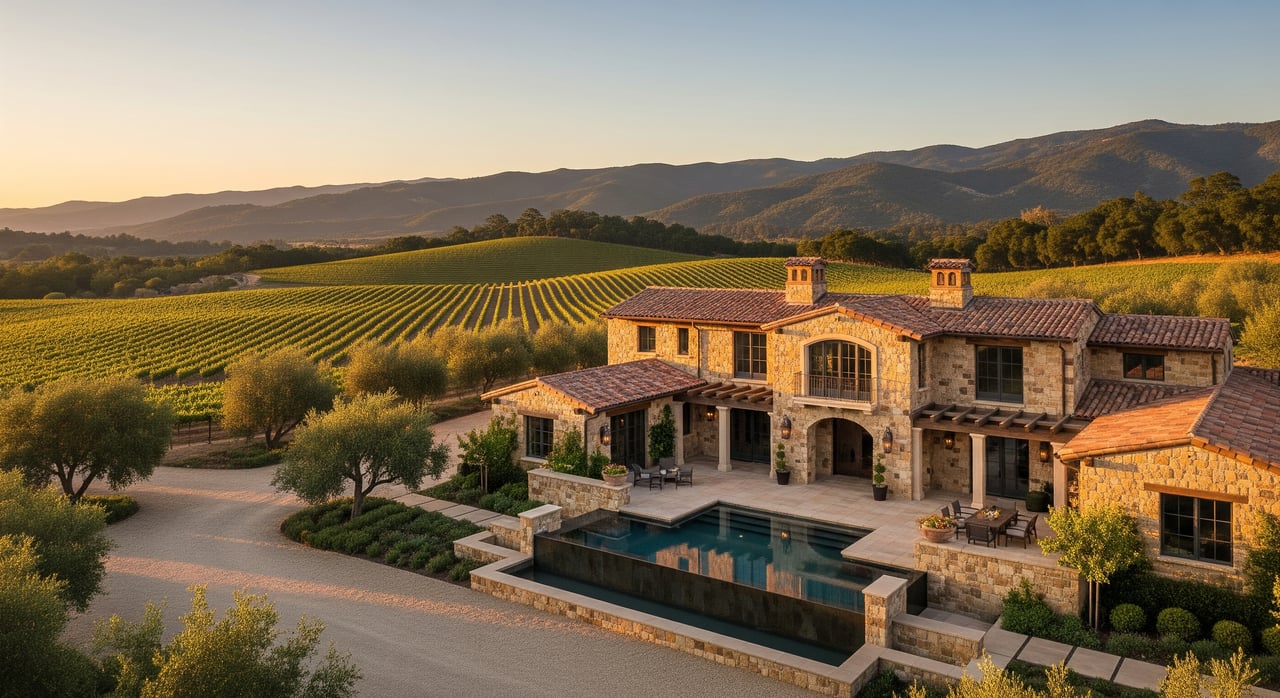
In the Santa Ynez Valley, higher‑value homes are common. Vineyard properties, equestrian estates, acreage, and renovated historic homes often sit well above conforming limits. That is why jumbo financing is a frequent part of the conversation for serious buyers in Santa Ynez, Solvang, Los Olivos, and Buellton.
Jumbo loans are held or sold by individual lenders, so guidelines can be stricter and more varied than conforming programs. You will see tighter credit, income, reserve, and documentation expectations.
Many lenders look for credit scores in the 700 to 760 range to access the most competitive pricing. Lower scores may still qualify, but you should expect higher rates, larger down payments, or a portfolio lender. Strong credit reduces perceived risk for the lender.
Down payments of 10 to 20 percent are common, and 20 percent is often the target for best pricing. Some products allow lower down payments, usually at higher cost and with stricter reserve rules. Ask about loan‑to‑value limits for your specific price point and property type.
Many jumbo programs prefer a debt‑to‑income ratio at or below the low‑40s. Some lenders allow up to the high‑40s when you have compensating factors like high reserves, excellent credit, or a low loan‑to‑value. The more conservative your DTI, the more options you typically have.
It is common to see reserve requirements between 6 and 24 months of principal, interest, taxes, and insurance. Larger loan amounts, higher LTVs, or more complex properties tend to push reserve requirements higher. Be prepared to show liquid and non‑liquid assets and to explain any large deposits.
If you are W‑2 employed, expect to provide recent pay stubs, two years of W‑2s, two years of tax returns, and a verification of employment. Self‑employed buyers should plan for deeper review, including business and personal returns, profit‑and‑loss statements, and possibly alternative documentation if using a non‑QM program. Documentation depth is a core part of jumbo underwriting.
Appraisals in the Valley can be more involved than a typical tract‑home valuation. Rural acreage, specialty ag uses, and custom luxury builds mean fewer easy comparable sales, which adds complexity.
Properties with vineyards, barns, arenas, accessory structures, or water improvements often lack close comparables. Appraisers may need to use sales from farther away or rely more on the cost or income approach. Land value, well versus municipal water, irrigation systems, and zoning carry real weight in the final opinion of value.
Standard home and pest inspections still apply. For rural and small‑farm properties, septic, well, and utility inspections are commonly required or strongly recommended. County zoning, permitting, and any ag‑use documentation are also important to review early.
Jumbo files often take longer than conforming loans. Plan on 30 to 45 days as a baseline. Complex income, layered assets, rural appraisals, or second appraisal requirements can extend to 60 days or more.
Interest rates on jumbos are not always higher, but they can be. Pricing depends on lender appetite, your credit, loan size, LTV, and the product you choose. Traditional mortgage insurance is not commonly available for jumbo loans, so lower down payments typically require different structures or lender‑specific solutions.
Expect higher third‑party fees in some cases. Appraisals on rural or high‑value properties cost more, and a second appraisal may be required for certain loan sizes. Rate locks may need to be longer to cover underwriting and appraisal timing. Discuss lock length, extension fees, and strategy with your lender early.
Use these steps to make your offer and escrow smoother.
If your listing likely requires jumbo financing, set clear expectations up front. Ask buyers to provide a strong pre‑approval and proof of funds for down payment and reserves. Be ready to allow extra time for appraisal scheduling and review.
Support the valuation with documentation. Provide recent comparable sales, highlight acreage and improvements, and share permits, well and septic reports, and any ag‑use records. Being proactive reduces risk of renegotiation later.
Jumbo financing is common in the Santa Ynez Valley, and it rewards preparation. Strong credit, clear documentation, seasoned funds, and a lender experienced with rural and luxury properties will set you up for success. With realistic timelines and a smart appraisal plan, you can move confidently on the right home.
If you are weighing jumbo financing for a Santa Ynez purchase or sale and want local, concierge‑level representation, connect with a trusted advisor who knows the Valley. Reach out to Cheylin Mackahan to talk strategy and next steps.
Stay up to date on the latest real estate trends.

Cheylin's extensive work history in a multitude of environments makes her an asset to any transaction. Cheylin attests her success and drive in Real Estate to her wonderful clients; becoming trusting, lasting, fulfilling relationships far beyond the transaction.
Get In Touch To Learn More

801 Chapala St Santa Barbara, CA 93101